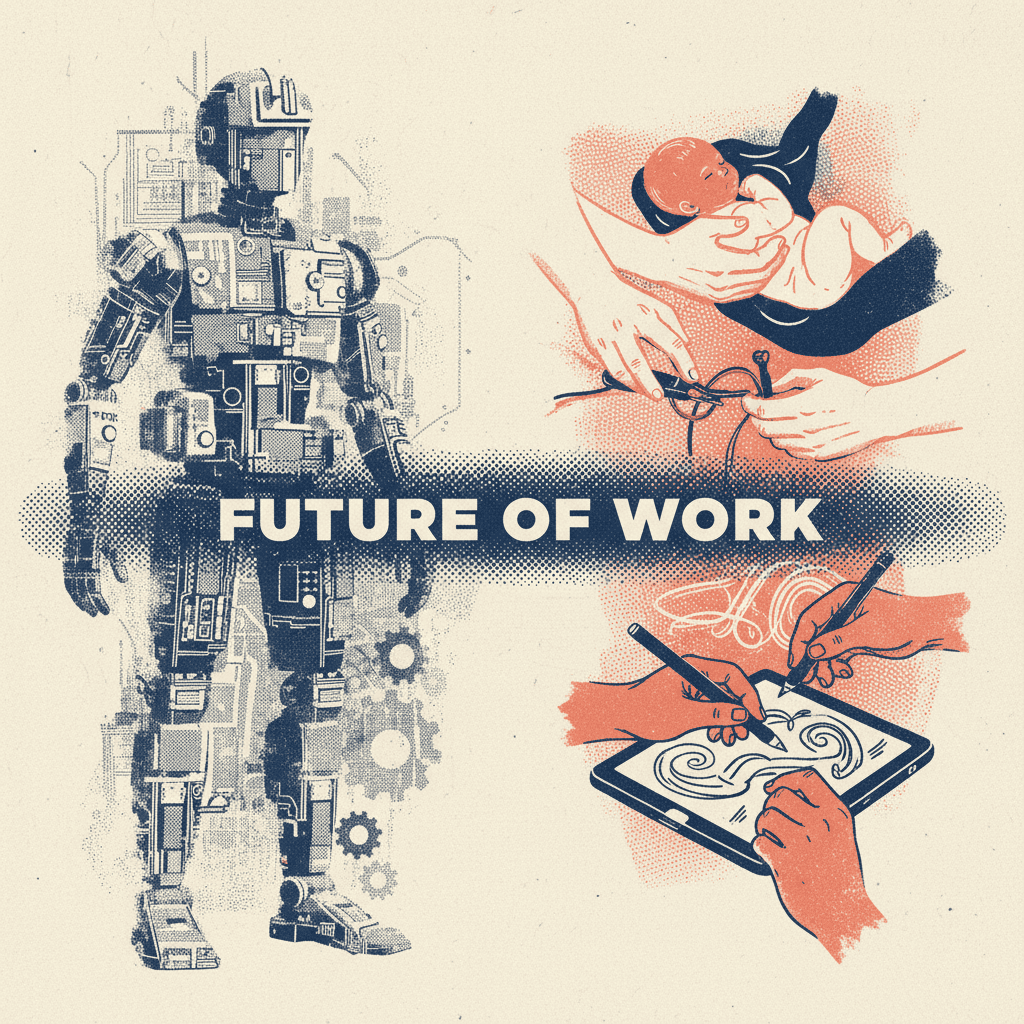
Every week brings another headline about AI replacing jobs. GPT writes code. Midjourney creates art. Automation handles customer service.
But here’s the reality most coverage misses: some careers aren’t just surviving AI—they’re doing better because of it.
Risk Score for AI-Proof Careers
Compared to 65-97% for high-risk occupations
While telemarketers (97% risk), bank tellers (87%), and data entry clerks (85%) face near-certain disruption, certain professions hover at just 10-25% automation risk.
What makes the difference?
What Makes a Career AI-Proof?
Three factors determine whether AI can replace a job:
1. Physical Presence Required
AI excels at digital tasks. It struggles with the physical world.
Robots can assemble cars in controlled factories. They can’t rewire your 1920s house or fix a leaking pipe behind your walls.
Any job requiring hands-on work in unpredictable environments remains safe. The “last mile” problem—getting from digital command to physical execution in varied conditions—is decades from being solved.
2. Complex Judgment Under Uncertainty
AI handles pattern recognition well. Novel situations? Not so much.
A nurse doesn’t just follow protocols. She notices when something feels “off” about a patient. She adapts care plans when three complications happen simultaneously. She makes judgment calls with incomplete information.
3. Human Connection as Core Value
Some jobs exist precisely because humans want humans.
Therapists could be replaced by AI chatbots technically. But people want human empathy for mental health. Teachers could be replaced by videos. But parents want human mentors for their children.
When human connection IS the product, automation defeats the purpose.
The 7 Most AI-Proof Careers
Based on our analysis of 80+ occupations, these careers consistently score lowest for automation risk.
1. Skilled Trades: Electrician, Plumber, HVAC
Why it’s safe:
Every house is different. Every problem is unique. A plumber needs to diagnose issues in walls they can’t see, work through spaces that don’t match blueprints, and improvise solutions with whatever’s available.
Best fit if: You like solving physical problems, working with your hands, and don’t want to sit at a desk.
Full transition guide with training options
View Details →2. Healthcare: Registered Nurses & Nurse Practitioners
Why it’s safe:
Healthcare combines all three immunity factors: physical presence (you can’t draw blood remotely), complex judgment (symptoms interact in unpredictable ways), and human connection (patients need reassurance, not just treatment).
AI will augment nurses with better diagnostics and documentation. It won’t replace the hands, judgment, and empathy that define nursing.
Best fit if: You’re empathetic, can handle stress, and want work that directly helps people.
Transition path: Home Health Aide → LPN → RN → Nurse Practitioner. Each step offers salary increases and more autonomy.
3. UX Design & Product Strategy
Why it’s safe:
AI can generate designs. It can’t understand why a 67-year-old grandmother gets frustrated with a checkout flow, or why the button should be blue instead of green based on brand psychology.
Best fit if: You’re curious about human behavior, enjoy problem-solving, and can balance creativity with business goals.
From zero to hired, no design degree needed
View Details →4. Cybersecurity Analyst
Why it’s safe:
Cybersecurity is an arms race. Attackers use AI. Defenders use AI. But the creative, strategic thinking—anticipating novel attacks, understanding attacker psychology, making judgment calls under pressure—requires human expertise.
Every new AI capability creates new attack surfaces. The more AI we deploy, the more cybersecurity experts we need.
Best fit if: You’re analytical, enjoy puzzles, and want a career where you’ll always be learning.
Entry path: CompTIA Security+ certification → SOC Analyst → Security Engineer → Senior roles
5. Product Manager
Why it’s safe:
Product managers decide WHAT to build, not how. They synthesize market research, customer feedback, technical constraints, and business goals into product decisions.
This requires judgment that changes daily. No training data exists for “what should this specific company build next quarter.”
Best fit if: You’re a generalist who enjoys business strategy, customer psychology, and cross-functional collaboration.
Transition guide from any background
View Details →6. Mental Health Professional
Why it’s safe:
AI therapy chatbots exist. People don’t want them for serious issues.
Mental health treatment requires human judgment (is this anxiety or a medical condition?), human connection (therapeutic alliance IS the treatment), and ethical decision-making (when to break confidentiality, how to handle crisis).
Best fit if: You’re deeply empathetic, patient, and want to make a direct impact on people’s lives.
Path options: Social work, counseling psychology, clinical psychology—each has different training requirements and scopes.
7. Data Analyst (with Business Context)
Why it’s safe (with a catch):
Pure data manipulation? AI handles that now. But translating data into business decisions, communicating insights to non-technical stakeholders, and knowing which questions to ask—that’s human territory.
Best fit if: You’re analytical, enjoy storytelling with data, and want to influence business decisions.
Technical skills + business impact
View Details →How to Identify AI-Proof Jobs Yourself
Use this checklist when evaluating any career:
High Safety Signals
- Physical presence in unpredictable environments
- Judgment calls with incomplete information
- Building relationships as core value
- Creative strategy over creative execution
- Regulatory/ethical complexity
Warning Signs
- Routine digital tasks
- Following established procedures
- Work that can be fully described in rules
- Output easily evaluated by metrics alone
- Limited human interaction required
The safest jobs combine multiple immunity factors. A nurse has physical presence AND complex judgment AND human connection. That triple protection is nearly impossible to automate.
Making the Transition
If you’re currently in a high-risk role, here’s the approach:
1. Identify Transferable Skills
Every job has skills that transfer. Customer service reps develop communication and empathy—valuable for healthcare or mental health careers. Data entry clerks develop attention to detail—valuable for quality assurance or data analysis.
2. Find the Bridge Role
Don’t jump directly to the target. Find intermediate positions that let you build relevant experience while earning. Home Health Aide → LPN → RN. Tech Support → Security Analyst → Security Engineer.
3. Start Learning Now
4. Network in Your Target Field
The hidden job market is real. Many positions fill through referrals. Start attending meetups, joining online communities, and building relationships before you need them.
The Bottom Line
AI will transform work. But “transform” doesn’t mean “eliminate.”
The jobs that survive and do well share common traits: physical presence, complex judgment, and human connection. Many of these careers offer better pay, better job security, and more satisfaction than the roles they’ll replace.
The window to transition is open now. In 2-3 years, more people will recognize these patterns. Competition for AI-proof careers will increase.
Explore all jobs by risk level on our homepage. Filter by LOW risk to see full details and transition paths.